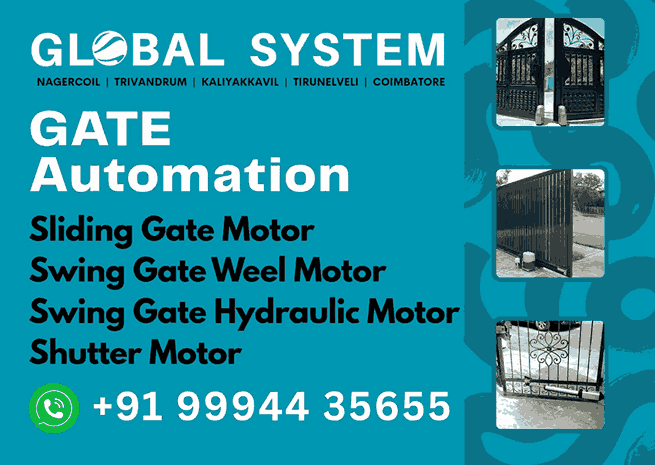
Global System Gate Automation in Tirunelveli
Address Info
Tirunelveli Junction, Tamil Nadu 627001
The Ultimate Guide to Gate Automation
Gate Automation in Tirunelveli In recent years, gate automation has become increasingly popular among homeowners looking to enhance the security and convenience of their properties. From sliding gates to swing gates, there are a variety of options available to suit different needs and preferences. In this comprehensive guide, we will explore everything you need to know about gate automation, including the benefits, types of gates, installation process, maintenance tips, and more.
What is Gate Automation?
Gate automation is the process of adding motorized components to a gate to allow for remote-controlled operation. This can include automatic opening and closing, as well as features such as intercom systems, keypads, and sensors for added security.
Benefits of Gate Automation
Enhanced Security: One of the primary benefits of gate automation is the increased security it provides. With a motorized gate, you can control who enters your property, reducing the risk of unauthorized entry.
Convenience: Gate automation also offers unparalleled convenience. You can open and close your gate with the push of a button, eliminating the need to manually open and close it each time you leave or arrive home.
Increased Property Value: Installing a gate automation system can significantly increase the value of your property. Potential buyers are often willing to pay more for homes with added security features.
Customization Options: There are numerous customization options available for gate automation, allowing you to choose a system that suits your unique needs and style preferences.
Types of Gates for Automation
Sliding Gates: Sliding gates are a popular choice for properties with limited space. They slide horizontally along a track to open and close, making them ideal for driveways with little room for a swinging gate.
Swing Gates: Swing gates are another common option for automated gates. They swing open and closed on hinges, similar to a traditional door, and are available in single or double gate configurations.
Bi-Folding Gates: Bi-folding gates fold in on themselves when opening, offering a space-saving solution for properties with limited driveway space.
Installation Process
The installation process for gate automation can vary depending on the type of gate and system you choose. It is recommended to hire a professional installer to ensure the job is done correctly and safely. Here are some general steps involved in the installation process:
Site Assessment: The installer will assess your property to determine the best location for the gate and any potential obstacles that need to be addressed.
Gate Selection: Choose the type of gate that best suits your needs and preferences, whether it be sliding, swing, or bi-folding.
Motor Installation: The motor and control system will be installed on or near the gate, allowing for remote operation.
Safety Features: Ensure that safety features such as sensors and automatic stop mechanisms are installed to prevent accidents.
Maintenance Tips
To keep your gate automation system running smoothly, it is important to perform regular maintenance. Here are some tips to help maintain your system:
Lubrication: Regularly lubricate moving parts such as hinges and tracks to prevent wear and tear.
Inspect Sensors: Check the sensors regularly to ensure they are functioning properly and are not blocked by debris.
Battery Check: If your system is battery-powered, regularly check the battery and replace it when needed to avoid downtime.
Professional Inspection: Schedule regular inspections by a professional to identify and address any potential issues before they become major problems.
In conclusion, gate automation is an excellent way to enhance security, convenience, and property value. With the variety of options available, there is a system to suit every need and budget. By following the installation process and maintenance tips outlined in this guide, you can enjoy the benefits of a fully automated gate for years to come.